
AI in Food
Eyes on the Line: AI Vision Replaces Manual Food Safety Audits
From spot-checks to 100% throughput oversight: The end of the manual inspection era.
By FTF Editorial Team·June 5, 2026·4 min read
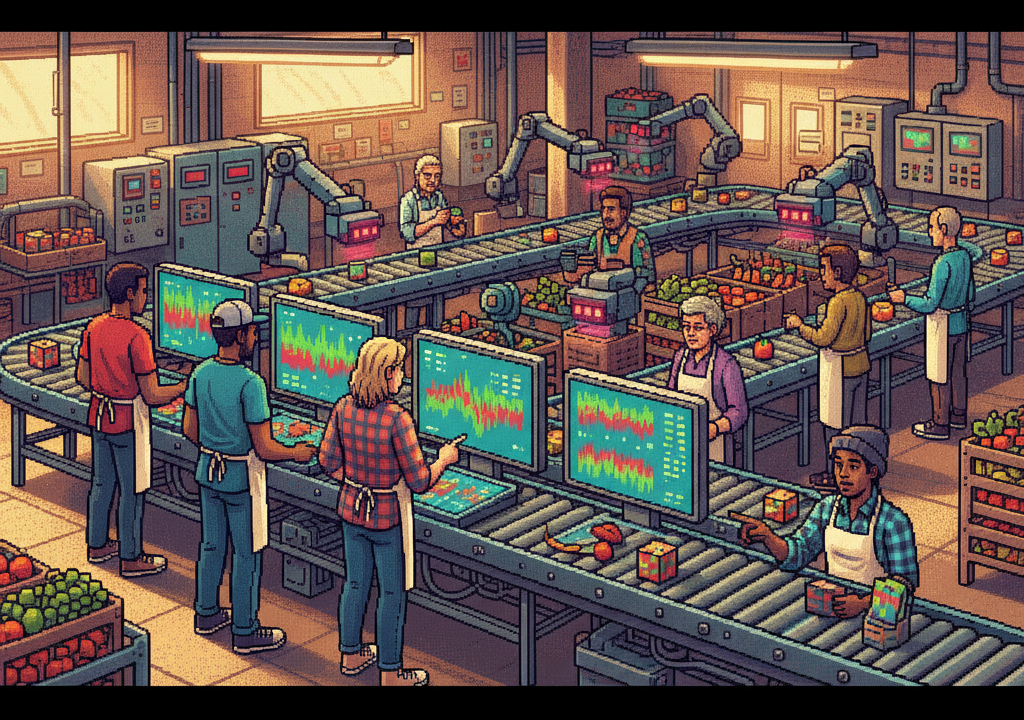
AI-driven computer vision is revolutionizing food safety by replacing manual sampling with 100% real-time inspection. Leading processors are achieving near-zero recall rates through sub-millimeter contaminant detection.
What happened

In the first half of 2026, the adoption of hyperspectral imaging and deep-learning vision systems has hit a tipping point in the North American food corridor. Major ready-to-eat (RTE) manufacturer Greencore Group recently completed a fleet-wide upgrade of its 'Hawk-Eye 5.0' systems, which can detect plastic shards as small as 0.2mm on high-speed conveyor belts. Simultaneously, General Mills has begun integrating AI 'surface-moisture' detection to flag potential salmonella-prone zones in cereal production before the product is even packaged. These systems are now processing up to 1,200 units per minute with a false-reject rate of less than 0.01%, a feat human inspectors cannot replicate.
Why it matters

The shift from manual sampling to 100% automated inspection represents the most significant change in HACCP (Hazard Analysis and Critical Control Points) protocols in thirty years. By digitizing safety, plants are no longer relying on the statistical probability of a sample; every single item is screened. This not only mitigates the skyrocketing costs of recalls (which averaged $11 million per incident for mid-sized firms in 2025) but also solves the persistent labor shortage in unpleasant, high-speed inspection roles.
Market impact

The global market for AI food inspection systems is projected to reach $4.8 billion by 2028, growing at a CAGR of 18.5%. Key players like Peco InspX and Key Technology have seen a 30% year-over-year increase in installations of spectral-imaging units. Tyson Foods recently announced a $150 million multi-year rollout of vision-based foreign object detection across its poultry plants, while Nestlé reported that automated 'Visual Auditing' has reduced localized waste by 12% at its European confectionery sites.
Consumer insight

While safety is traditionally a 'behind-the-scenes' concern, a 2025 survey by Mintel indicated that 64% of consumers now check the 'origin and safety' credentials of a brand before a first-time purchase. The rise of 'Radical Transparency' has led shoppers to favor brands that can prove consistent quality. For the Gen Alpha consumer, knowing that a pack of frozen berries has been 'Vision-Verified' for contaminants provides a level of reassurance that manual spot-checks simply cannot match, turning a compliance necessity into a trust-based marketing asset.
Strategic takeaway

Processors should move away from the 'find and fix' model toward predictive prevention. Implementation should prioritize high-risk lines, such as proteins and leafy greens, where the ROI on avoiding a single Class I recall can pay for the entire hardware infrastructure in under 12 months.
Get the next signal in your inbox.
Daily food industry intelligence — free.
You've reached the end.