Grocery
Freeze-Dried Candy Moves Beyond TikTok and Into the Mainstream
For 2026 confectionery innovation, the opportunity is bigger than a viral crunch: it is turning a sensory novelty into a repeatable grocery and convenience purchase.
By FTF Editorial Team·August 12, 2026·4 min read
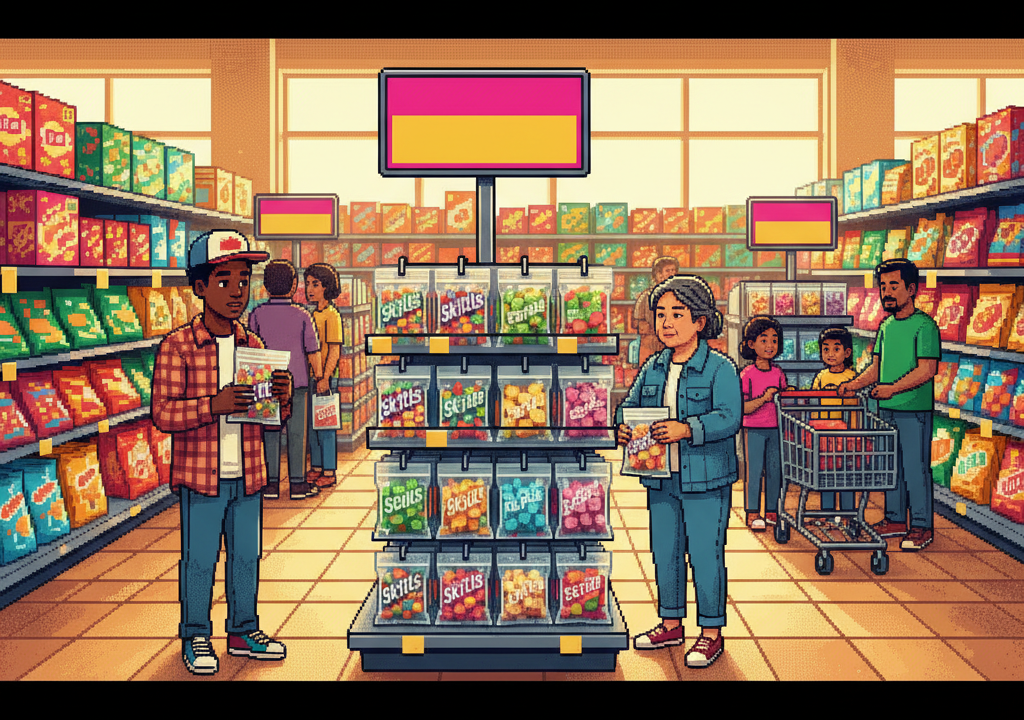
Freeze-dried candy has moved from social-commerce experimentation into branded, nationally distributed confectionery. The challenge for 2026 is making its distinctive crunch work at mainstream prices, on retail shelves and beyond the first trial.
What happened

Small sellers helped popularize freeze-dried candy through TikTok videos, online shops and direct-to-consumer sales. Familiar chewy sweets became airy, brittle bites, giving creators a transformation they could demonstrate through close-ups, taste tests and amplified crunch sounds. The appeal was immediately legible: recognizable candy, radically different texture.
The move toward mainstream retail has a concrete milestone. Mars announced SKITTLES POP'd in 2024, with nationwide U.S. availability beginning in 2025. That launch brought an established confectionery brand into a space previously associated with smaller operators processing and repackaging existing sweets. It also established that freeze-dried texture could become a branded product platform, rather than remain solely a seller-led novelty.
For 2026, the story is the commercialization of that platform across grocery and convenience shopping occasions. National distribution does not mean every chain carries the format, or that every viral seller can scale. It does mean innovation teams are evaluating freeze-dried candy against conventional confectionery requirements: reliable supply, shelf-ready packaging, competitive pricing and reasons to repurchase.
Why it matters

Freeze-dried candy illustrates how a change in physical structure can create a new eating experience without requiring consumers to learn an unfamiliar flavor. Freeze-drying removes moisture under vacuum after freezing, and suitable candies can develop expanded, porous structures. Results vary by formulation, so the process is not a universal shortcut for converting an existing portfolio into crunchy extensions.
For brand managers, the strategic attraction is recognizable novelty. An established flavor identity can reduce the explanation required at trial, while the texture supplies the news. However, the shift from chewy to brittle also changes portion perception, messiness and eating pace. Those differences deserve testing as product attributes, not just treatment as social-media talking points.
Market impact

Mainstream participation changes the competitive pressure on independent sellers. Major manufacturers can combine familiar trademarks, distribution relationships and marketing support. Smaller specialists may need sharper differentiation through original formulations, distinctive assortments or faster experimentation. Businesses built around repackaging another company's branded candy also need to assess trademark use, labeling obligations and the distinction between identifying an ingredient and implying an affiliation.
Economics will shape how far the format travels. Freeze-drying adds equipment, processing time and handling requirements. Expanded pieces can occupy substantial package volume relative to their weight, while fragile textures make breakage a concern. Grocery and convenience buyers will need evidence that the resulting price, package size and sales velocity justify shelf space. A visually generous bag is not automatically an attractive value proposition.
Consumer insight

The initial attraction combines familiarity with surprise. Consumers can anticipate the flavor but not necessarily the sensation, making freeze-dried candy particularly suited to demonstrations and shared tastings. Crunch sounds and visible texture help communicate the difference online. In physical retail, packaging must perform more of that explanatory work through clear product naming, imagery and a concise texture promise.
Repeat purchase is a separate question from curiosity. Brands should test whether shoppers want an occasional novelty, a shareable treat or a regular alternative to chewy candy. They should also examine reactions after opening: whether pieces remain crisp, whether fragments accumulate and whether the eating experience feels worth the premium. Removing moisture does not inherently make candy lower in sugar or healthier, so texture-led positioning should not drift into unsupported wellness claims.
Strategic takeaway

Treat freeze-dried candy as a formulation, packaging and channel-development project, not simply a processing trend. Start with candies that deliver a distinctive sensory result, then validate moisture protection, transport durability, shelf life and repeat-purchase intent. Grocery sharing packs and convenience trial packs are useful hypotheses to test, rather than assumptions about how consumers will buy.
The broader innovation lesson is that social commerce can reveal demand for a new texture before traditional category planning captures it. Winning at national retail requires translating that signal into a dependable product with understandable value. In 2026, the strongest proposition is not merely candy that looks interesting on camera, but candy whose crunch remains compelling after the novelty fades.
Get the next signal in your inbox.
Daily food industry intelligence — free.
You've reached the end.