Beverage Trends
Hibiscus Blooms Into the Functional Beverage Aisle's Star Botanical
Tart, ruby-red hibiscus is replacing artificial color and flavor in a wave of better-for-you sodas, teas, and aguas frescas.
By FTF Editorial Team·June 22, 2026·4 min read
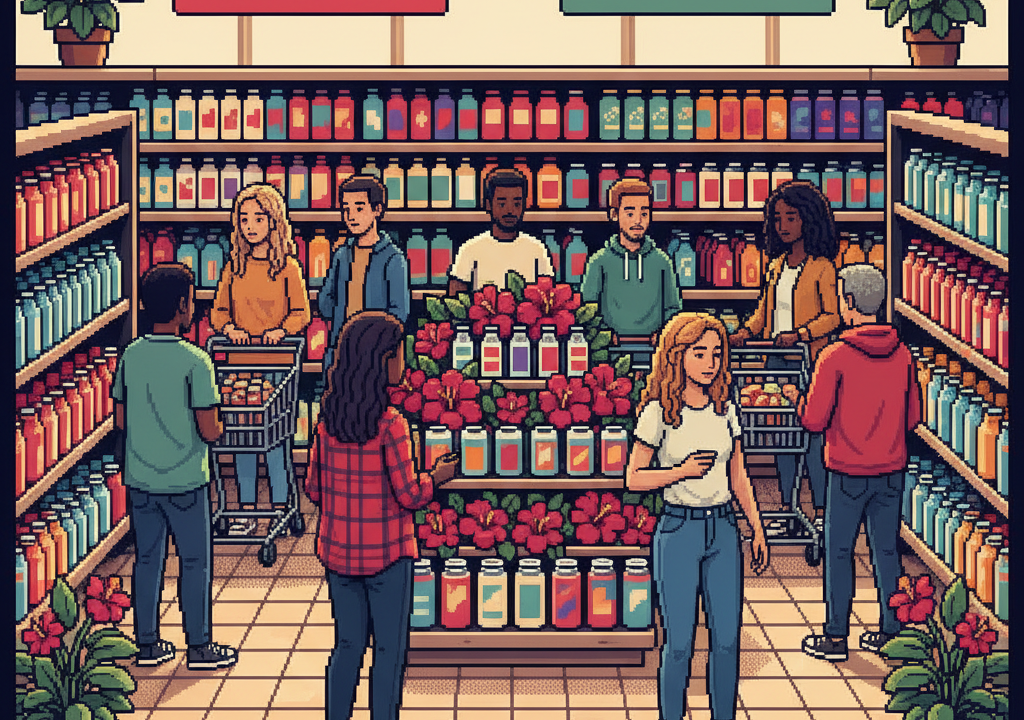
Hibiscus is surging in 2026 as a natural color-and-flavor twofer, anchoring functional sodas and aguas frescas that promise tartness, antioxidants, and clean labels.
What happened

Hibiscus, long familiar as agua de jamaica and herbal tea, became a beverage-industry workhorse in 2026. Verde Soda Co. built an entire prebiotic line around hibiscus, citing its naturally ruby color and cranberry-like tartness as a way to ditch synthetic dyes and added acids. National tea brands relaunched hibiscus blends with functional claims around polyphenols and blood-pressure support.
The ingredient's dual function is the draw: hibiscus delivers vivid natural color and bright tartness simultaneously, letting formulators cut artificial red dyes (under fresh regulatory scrutiny) and citric acid in one move. Suppliers in Nigeria, Egypt, and Mexico scaled food-grade calyx exports to meet demand, and contract drying improved consistency.
Aguas frescas crossed into mainstream foodservice as well, with two fast-casual chains adding house-made hibiscus refreshers in Q2 2026.
Why it matters

Hibiscus rides two powerful 2026 currents at once: the retreat from synthetic dyes and the rise of functional, botanically driven beverages. By solving color and flavor naturally while carrying a wellness halo, it is uniquely positioned as the beverage industry reformulates.
Its deep cultural roots in Latin American, West African, and Caribbean cuisines also give brands an authentic story, broadening appeal beyond the wellness core to heritage-driven consumers.
Market impact

Hibiscus-forward beverage launches rose an estimated 40% year over year, concentrated in the prebiotic-soda and functional-tea segments. Natural-color reformulation, accelerated by dye scrutiny, is expected to keep demand climbing through 2027.
Consumer insight

Drinkers associate hibiscus with both indulgent tartness and natural wellness, a rare combination that supports premium pricing. Its familiarity in cultural beverages lowers the trial barrier compared with more obscure botanicals.
Strategic takeaway

Position hibiscus as a clean-label color-and-flavor solution to capture dye-reformulation budgets, and lean into its cultural authenticity to differentiate from generic 'berry' beverages.
Get the next signal in your inbox.
Daily food industry intelligence — free.
You've reached the end.