
Restaurants
Robotic Kitchens Move From Demo to Daily Service
Sweetgreen, Chipotle, and a wave of ghost-kitchen operators are putting machines on the line, quietly.
By FTF Editorial Team·May 13, 2026·6 min read
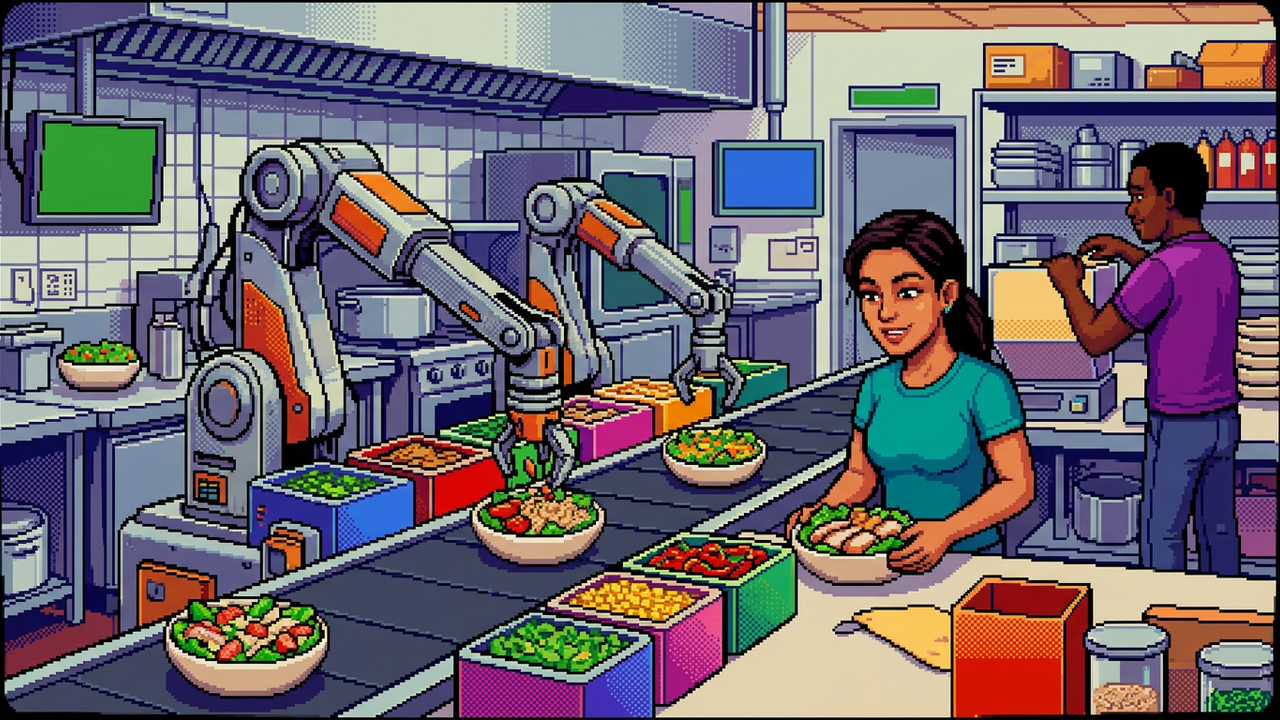
Labor cost pressure and a structural cook shortage are pushing chains past pilot fatigue. The new wave of kitchen automation is built around assembly, not theater.
What happened

Sweetgreen has begun rolling out its Infinite Kitchen makeline to about a third of new builds, while Chipotle continues expanding its Autocado avocado-prep robot and a chip-fryer system. Several large ghost-kitchen operators have replaced 2–3 line positions per shift with assembly automation.
Why it matters

The cook shortage is structural (the BLS projects roughly 700K openings annually through 2030), and franchisee P&Ls cannot absorb another wage cycle without throughput gains. Automation moved from "innovation theater" to "unit economics" in 18 months.
Market impact

Expect 8–12% labor cost reduction in pilot stores and 20–30% throughput gains during peak windows. Equipment vendors (Miso, Hyphen, Picnic) become the new strategic suppliers, with multi-year contracts replacing per-unit licensing.
Consumer insight

Guests are largely indifferent; speed and accuracy matter more than novelty. Brands that hide the robots and elevate the human roles (hospitality, expediting) outperform those that lean into the spectacle.
Strategic takeaway

CFOs should model automation ROI on a 24-month payback at peak-hour volumes, not on average-day throughput. The winning operators will redeploy labor savings into hospitality and digital ops, not headcount cuts.
Get the next signal in your inbox.
Daily food industry intelligence — free.
You've reached the end.