
AI in Food
Robot Runners and Bussers Become Standard Restaurant Crew in 2026
Affordable food-running and busing robots have moved from novelty to necessity, plugging persistent labor gaps in casual dining.
By FTF Editorial Team·June 29, 2026·4 min read
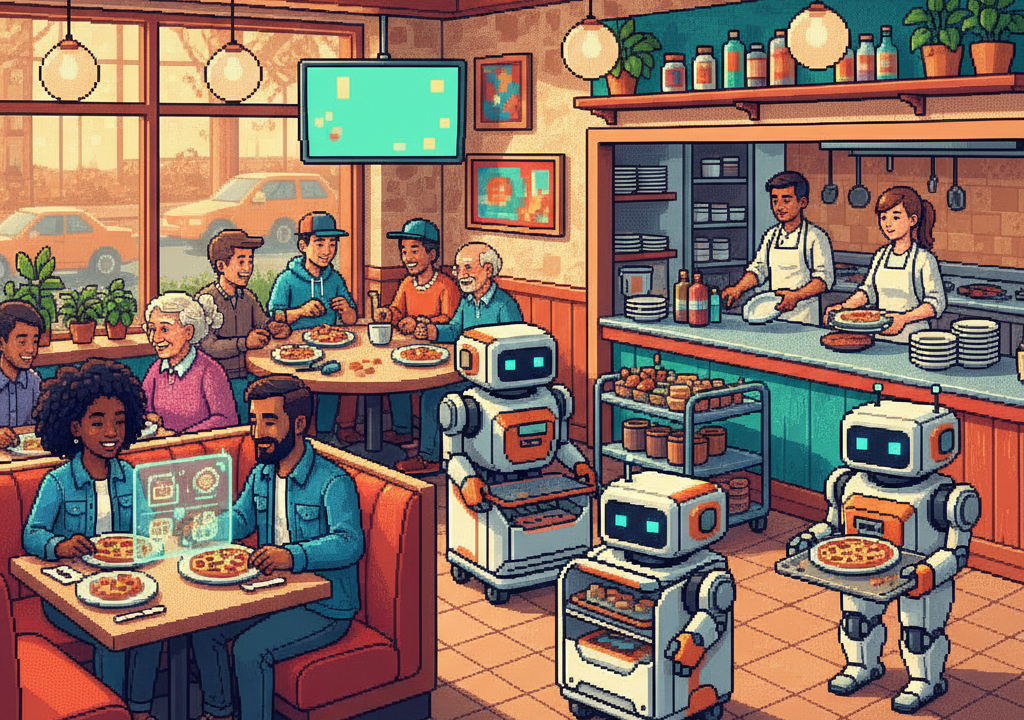
Service robots for food running and busing became standard equipment in 2026 as falling costs and chronic labor shortages made them a practical fix for casual and family dining.
What happened

Service robots crossed from gimmick to infrastructure in 2026. Falling hardware costs and improved navigation made food-running and busing robots a routine sight in casual and family dining. Servora Robotics reported its restaurant fleet more than doubled as a national family-dining chain deployed runner robots across hundreds of locations to offset chronic server shortages.
The economics finally worked. Robot lease costs dropped to roughly the equivalent of a fraction of one server's wages, while the machines reliably handle the repetitive, low-skill task of ferrying plates and clearing tables. This freed human staff for guest interaction and upselling. Better mapping and obstacle avoidance reduced the awkward collisions that plagued earlier deployments.
The robots augment rather than replace staff: operators position them as tools that let scarce human servers focus on hospitality, easing both labor shortages and staff burnout.
Why it matters

The robot-runner boom shows automation entering restaurants not as wholesale replacement, but as targeted relief for specific tasks (running and busing) that are hardest to staff and least guest-facing. By offloading drudgery, robots help retain human staff for the hospitality work that drives loyalty.
The tipping point was cost: once lease rates fell below the labor they offset, adoption shifted from experimental to economically obvious for high-volume casual concepts.
Market impact

Service robot deployment in casual and family dining grew sharply in 2026 as lease costs fell below the labor they replace. Augmentation positioning (freeing humans for guest service) drove acceptance among both operators and diners.
Consumer insight

Diners largely accept runner and busing robots, especially when human servers remain the face of hospitality. Novelty appeal even boosts visits at family concepts, while staff welcome relief from repetitive tasks.
Strategic takeaway

Deploy robots for repetitive running and busing to offset labor gaps, redeploying human staff to guest-facing hospitality that drives loyalty and check size.
Get the next signal in your inbox.
Daily food industry intelligence — free.
You've reached the end.