Restaurants
The Quick-Age Revolution: Koji’s Hostile Takeover of the Steakhouse
New enzymatic shortcuts are enabling steakhouses to bypass traditional 45-day aging cycles while maintaining premium flavor profiles.
By FTF Editorial Team·June 14, 2026·5 min read
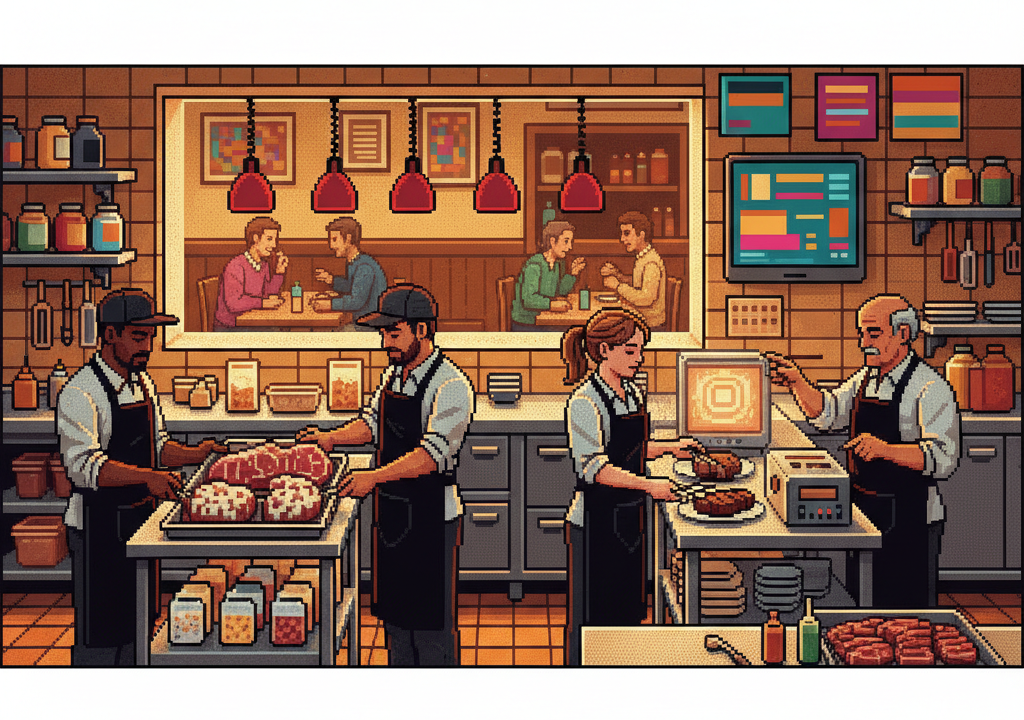
New enzymatic advancements in Koji inoculation are allowing restaurants to achieve 45-day dry-aged flavor profiles in just five to seven days. This shift significantly reduces inventory costs and trim waste, democratizing high-end steak programs.
What happened

As of June 2026, the culinary world has seen a massive shift toward bio-accelerated maturation. Major hospitality groups, including the Union Square Hospitality Group and the newly formed Prime-Tech Collective, have announced the broad implementation of Koji-mold (Aspergillus oryzae) inoculation across their steak programs. Utilizing high-density spore misting systems developed by Amano Enzyme and Koji-Pro, restaurants are now replicating the nutty, blue-cheese notes of a 45-day dry-age in a fraction of the time. This month, New York’s 'Oryza Steakhouse' became the first Michelin-recognized establishment to exclusively use seven-day Koji-aged cuts, reporting a 22 percent reduction in trim loss and significantly lower refrigeration energy costs compared to traditional 2024 standards.
Why it matters

The traditional dry-aging process is an economic liability in a high-inflation environment; it ties up thousands of dollars in inventory for months while 30 percent of the product is literally lost to evaporation and rot. Koji-aging flips this model by using enzymes to break down connective tissue and proteins at an accelerated rate from the inside out. This allows a restaurant to turn over its meat locker four times faster than before. Furthermore, it allows for the elevation of lower-cost subprimals, such as hanger steaks or tri-tip, into 'premium' aged products, creating high-margin opportunities that were previously impossible with traditional aging durations.
Market impact

The rapid-aging technology sector within the food service industry is projected to reach $1.4 billion by 2028, growing at a CAGR of 12.8 percent. As of June 2026, over 400 high-volume steakhouses across North America have pivoted to Koji-based systems to mitigate the impact of rising beef prices, which have climbed 18 percent over the last two years. By reducing the holding time of capital-intensive protein inventory from six weeks to one, operators are reporting a 14 percent improvement in liquid cash flow. Leading suppliers like Mycotech Labs are now offering pre-inoculated subprimals, further accelerating the adoption of this technology in mid-tier dining segments.
Consumer insight

Modern diners are caught between a desire for culinary excellence and a growing discomfort with high-waste luxury practices. The Koji-aging trend appeals to the ethically conscious food enthusiast because it delivers the depth of flavor associated with long-matured steak without the 25 percent trim loss common in traditional aging. Consumers in mid-2026 are increasingly 'flavor-forward' but 'waste-averse,' and they are willing to pay a slight premium for 'bio-accelerated' foods that they perceive as more sustainable and scientifically innovative than conventional aging methods.
Strategic takeaway

Operators should transition from traditional dry-aging rooms to controlled Koji-inoculation chambers to unlock immediate capital. Partnering with specialized fermentation startups for consistent spore strains ensures flavor uniformity and safety compliance. This approach not only slashes overhead but also serves as a potent marketing tool for the 'Scientific Sustainability' narrative that currently dominates the premium dining sector. Small-scale testing with secondary cuts like bavette or chuck flap can validate the process before scaling to prime ribeye.
Get the next signal in your inbox.
Daily food industry intelligence — free.
You've reached the end.