
AI in Food
The Silent Shift: AI Voice Agents Now Command the Drive-Thru Lane
Conversational AI crosses the threshold of human-level accuracy, fundamentally restructuring the fast-food labor model.
By FTF Editorial Team·June 10, 2026·5 min read
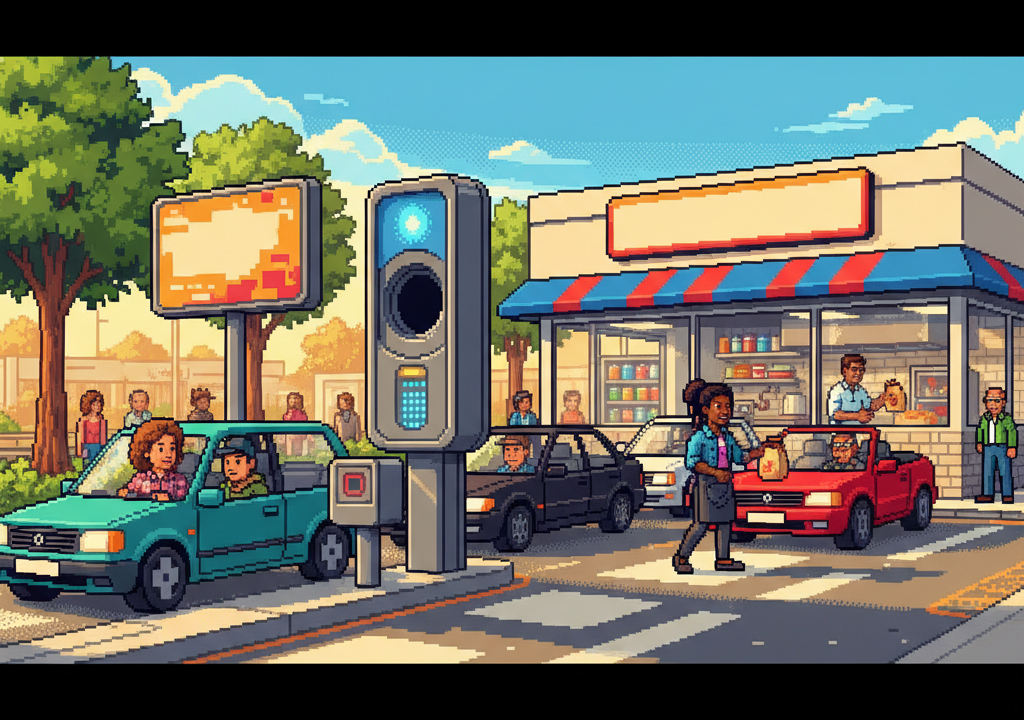
The QSR landscape has hit a tipping point as major chains achieve 95% order accuracy through advanced conversational AI. This shift is transforming labor models and boosting throughput across the fast-food industry.
What happened

As of June 2026, the fast-food drive-thru has officially entered the era of the 'Digital Order Taker.' Following a massive 2,500-unit rollout by Yum! Brands and successful pilot completions at Wendy’s and Hardee’s, AI voice agents now manage over 40% of all US drive-thru transactions. Industry leaders like Presto and SoundHound have unveiled 'Gen-4' agents capable of handling complex dietary substitutions and ambient noise (such as crying children or heavy rain) with a 95.8% accuracy rate. This surge follows the 2025 integration of real-time sentiment analysis, allowing AI to detect frustrated customers and instantly hand off the call to a human manager. McDonald’s has also reported that its proprietary ‘Automated Order Taking’ system has reduced 'wait-to-window' times by a record-breaking 18% nationwide.
Why it matters

This shift represents the most significant change to the QSR operational model since the introduction of the digital POS system. By automating the order-taking process, brands are solving the chronic labor shortages that have plagued the industry since 2021. More importantly, AI agents do not forget to upsell; data indicates that AI-led transactions result in a 12% higher attachment rate for sides and beverages. This technology also allows the remaining kitchen staff to focus exclusively on food quality and assembly speed, effectively decoupling the ordering process from the physical constraints of the restaurant staff's cognitive load during peak hours.
Market impact

The QSR automation market is projected to reach $18.4 billion by 2030, growing at a CAGR of 12.1% from 2024. In the first half of 2026, the industry saw a localized surge as voice-AI integration led to an average reduction in service time of 22 seconds per vehicle. For a high-volume unit, this translates to an additional 15-20 orders during peak lunch windows. Major hardware providers have reported a 40% year-over-year increase in 'smart-board' installations. Large-scale adoption is expected to shift $2.1 billion in annual labor costs toward technology licensing and infrastructure maintenance, while simultaneously raising average check sizes by 8% through persistent, data-driven suggestive selling algorithms.
Consumer insight

Modern diners prioritize speed and accuracy over human interaction in high-friction environments like the drive-thru lane. Recent surveys show that 68% of Gen Z and Millennial consumers feel less 'social pressure' when ordering from an AI agent, leading to a 14% increase in customized add-ons. The comfort of a consistent, non-judgmental voice allows customers to explore menus more thoroughly. However, the 'uncanny valley' remains a risk; consumers respond best to voices that are transparently synthetic but possess high emotional intelligence and local dialect recognition.
Strategic takeaway

Brands must shift from viewing AI as a cost-cutting tool to a revenue-generation engine. The focus should be on 'hyper-personalization,' using license plate recognition to sync AI agents with loyalty profiles. Operators should reinvest labor savings into 'high-touch' hospitality roles or kitchen speed. Early adopters who move beyond basic voice-to-text into proactive, emotionally intelligent sales agents will capture the highest market share. Testing local dialects and noise-canceling hardware is essential to maintaining the current 95% accuracy benchmark.
Get the next signal in your inbox.
Daily food industry intelligence — free.
You've reached the end.