Beverage Trends
Dirty Soda Shops Scale Nationally Beyond the Mountain West
Utah's 'dirty soda' concept leverages non-alcoholic beverage trend for 2026 national drive-thru expansion, challenging traditional quick-service models.
By FTF Editorial Team·July 2, 2026·5 min read
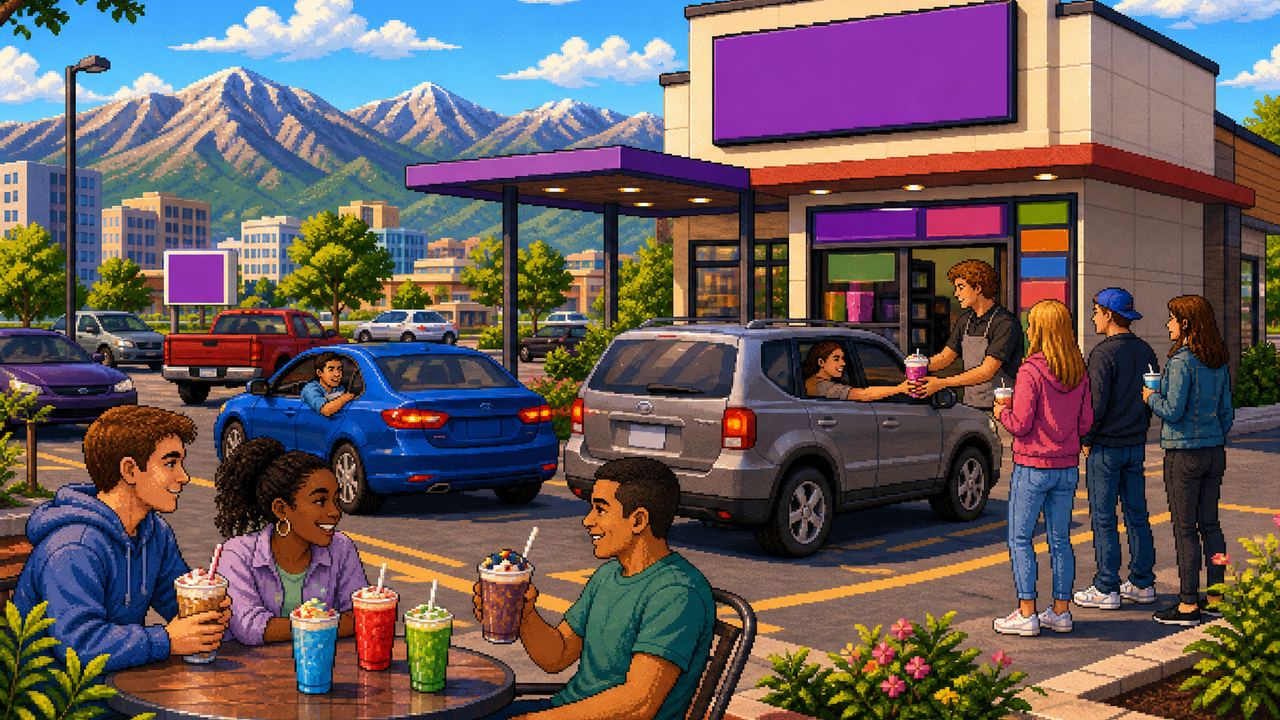
Drive-thru 'dirty soda' chains, originating in Utah, are poised for national expansion by 2026. This growth is fueled by strong consumer demand for customizable, non-alcoholic social beverages.
What happened

The 'dirty soda' phenomenon, characterized by carbonated beverages infused with cream, flavored syrups, and fruit purees, is rapidly transitioning from a regional specialty to a national quick-service beverage category. Chains like Sodalicious and Swig, dominant in the Mountain West, are actively pursuing aggressive franchise and corporate expansion strategies across the U.S., with significant new market entries anticipated in 2026.
This expansion is propelled by substantial private equity investments and a proven operational model focusing on high-volume drive-thru service. Industry analysts point to increased real estate acquisition in suburban growth corridors and strategic partnerships with regional developers as key indicators of this accelerated rollout. The operational efficiency of these drive-thru-only or drive-thru-first concepts minimizes overheads while maximizing throughput, a critical factor for scalability.
Initial market testing outside their traditional footprint, including pilot locations in Texas and Arizona, has demonstrated robust sales figures and strong consumer acceptance. This validates the portability of the concept beyond its cultural origins, suggesting a broader appeal for customizable, non-alcoholic specialty drinks.
Why it matters

The national scaling of dirty soda chains represents a significant disruption in the beverage and quick-service restaurant (QSR) sectors. It carves out a distinct niche that directly competes with coffee-centric drive-thrus, traditional soda fountains, and even dessert-focused establishments, offering a novel product proposition.
This trend also underscores the evolving consumer landscape, particularly the growing preference for non-alcoholic options in social and refreshment occasions. For food and beverage manufacturers, it presents new opportunities for syrup, flavoring, and dairy alternative product innovations tailored to this burgeoning segment. Furthermore, it signals a shift in QSR development towards highly specialized, beverage-led concepts that prioritize convenience and customization.
Market impact

Established QSRs and beverage brands face increased competition for consumer beverage dollars. This category's growth may necessitate reactive innovation in existing menus or strategic partnerships. Ingredient suppliers, particularly those in flavorings, sweeteners, and dairy alternatives, will see significant new demand. Real estate markets will experience heightened activity for drive-thru-suitable sites.
Consumer insight

Consumers are increasingly seeking unique, customizable beverage experiences that align with social occasions but do not involve alcohol. The 'dirty soda' trend caters to a desire for indulgence and novelty, offering a permissible treat that is perceived as more exciting than standard fountain drinks and more accessible than premium coffee.
Strategic takeaway

Food and beverage companies should analyze the dirty soda ingredient supply chain for market entry opportunities. QSR operators should consider integrating customizable specialty soda options into their menus or exploring strategic co-location partnerships to capture this growing consumer segment.
Get the next signal in your inbox.
Daily food industry intelligence — free.
You've reached the end.