
Food Tech
The Prawn Revolution: Indoor RAS Farms Scale Across the Heartland
How Recirculating Aquaculture Systems are reclaiming the US seafood plate from imports.
By FTF Editorial Team·June 6, 2026·4 min read
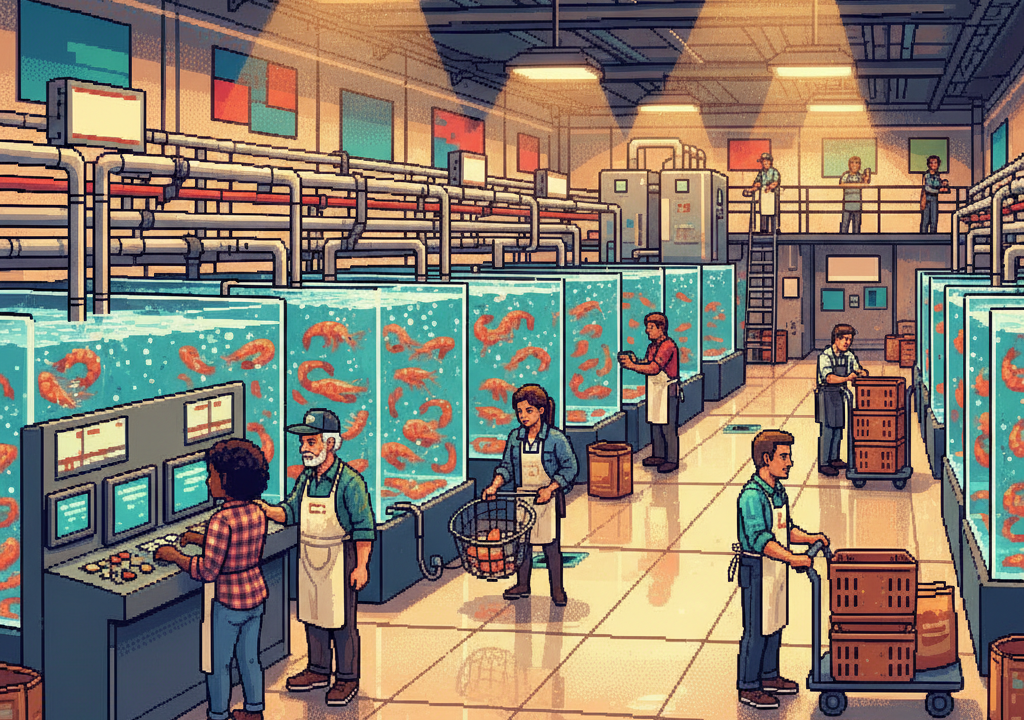
Domestic recirculating aquaculture systems (RAS) are hitting scale, offering chemical-free, 'never-frozen' shrimp to US retailers. Brands like TruShrimp and Atarraya are disrupting the $5 billion import market.
What happened

In early June 2026, TruShrimp officially opened its second large-scale 'Kilometer' facility in South Dakota. Meanwhile, tech-forward startup Atarraya announced a retail partnership with Whole Foods Market to supply 'Harvest-Day' shrimp from its modular Shrimpbox clusters in Indiana. These facilities use closed-loop recirculating aquaculture systems (RAS) to grow Pacific White shrimp in bio-secure, inland environments. By eliminating the need for antibiotics and preservatives like bisulfites (standard in international shipping), these farms are successfully delivering fresh, head-on prawns to landlocked markets within 24 hours of harvest.
Why it matters

Nearly 90% of shrimp consumed in the US is currently imported, often traveling over 8,000 miles. These imports often face scrutiny regarding labor practices and environmental degradation in mangroves. The shift toward domestic RAS infrastructure represents a fundamental pivot toward seafood security and decarbonization. For retailers, this provides a 'High-ESG' product that mitigates the risk of supply chain disruptions in the Pacific. It also offers a taste profile (characterized by a firm texture and lack of iodine aftertaste) that traditional frozen imports cannot match.
Market impact

The domestic RAS shrimp sector is projected to grow at a 14.5% CAGR through 2030. While imported shrimp still dominates, domestic 'hyper-local' shrimp has captured 4% of the premium retail market since 2024. Major players like TruShrimp are scaling their 'Kilometer' projects, aiming for 1.3 million pounds of annual capacity per site. Meanwhile, Atarraya’s modular 'Shrimpbox' technology has secured $25 million in Series B funding to deploy units across the Midwest, challenging the price parity of frozen imports from India and Ecuador.
Consumer insight

Modern 'climatarians' are increasingly wary of the opaque supply chains associated with imported frozen shrimp. Recent qualitative surveys indicate that 64% of high-income urban consumers associate 'fresh, never frozen' domestic shrimp with premium quality and lower carbon footprints. There is a growing rejection of shrimp treated with sodium tripolyphosphate (STPP) for weight retention; consumers are instead seeking the 'clean snap' and natural sweetness of harvest-to-table shrimp that skip the long-haul cold chain.
Strategic takeaway

CPG buyers and high-end seafood counters should secure forward-purchase agreements with domestic RAS providers now to hedge against volatile import tariffs and volatile ocean freight costs. Marketing should emphasize the 'chemical-free' and 'never frozen' attributes to justify the 15-20% price premium over traditional frozen imports.
Get the next signal in your inbox.
Daily food industry intelligence — free.
You've reached the end.