
Wellness
NAD+ Boosters Move From Longevity Clinics to the Wellness Aisle
The biohacking staple Nicotinamide Adenine Dinucleotide (NAD+) has successfully transitioned from $500 IV drips to $5 functional lattes and snack bars.
By FTF Editorial Team·June 15, 2026·6 min read
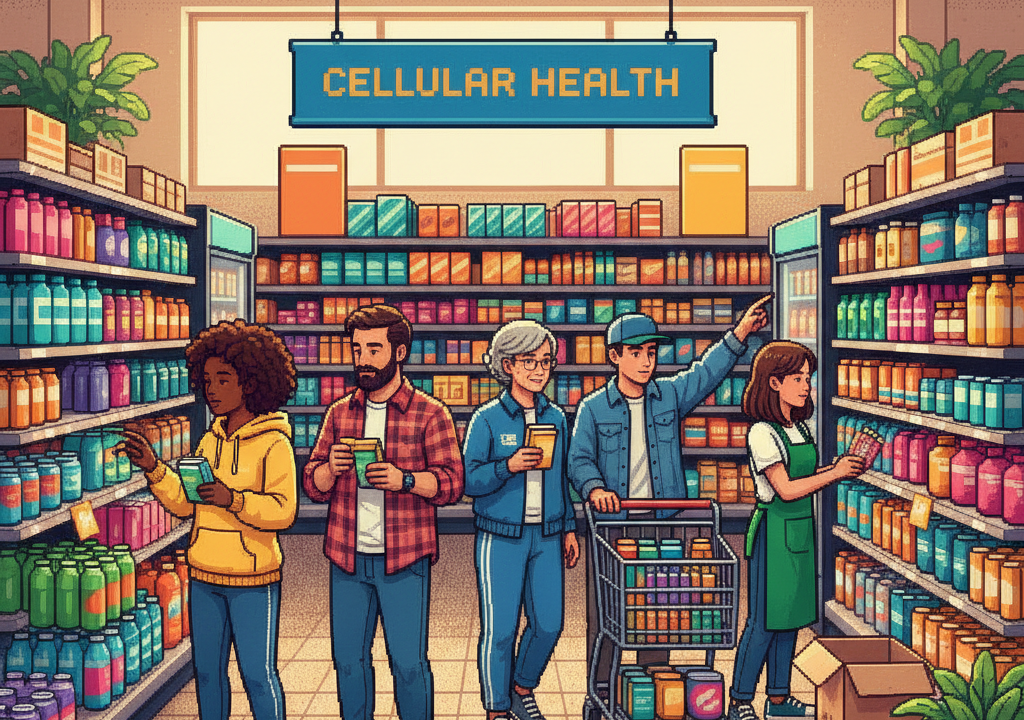
Once restricted to expensive longevity clinics and niche supplements, NAD+ boosters are flooding the mass market in 2026. From functional sparkling waters to fortified snack bars, Nicotinamide Riboside (NR) and NMN are becoming the new 'it' ingredients for cellular health, reshaping the $18 billion wellness beverage category.
What happened

In early May 2026, the retail landscape shifted significantly when VitalCell Foods launched its 'NR-Core' line of sparkling waters across 2,400 Whole Foods and Target locations. Unlike the pill-form precursors popular in 2024, these beverages utilize a stabilized form of Nicotinamide Riboside (NR) that maintains potency in liquid form for up to six months. Concurrently, Aura Snacks debuted the world’s first NMN-infused almond butter bar, which sold out its initial 500,000-unit production run within three weeks of its June 1st launch.
The acceleration into the mass market follows a landmark January 2026 FDA clarification, which provided a clearer regulatory pathway for certain NAD+ precursors as "Generally Recognized as Safe" (GRAS) additives in specific concentrations. This has spurred a wave of R&D investment. For instance, Cellerate Labs reported a $85 million Series C round last month, specifically to scale its proprietary fermentation process that slashes the cost of high-purity NMN by 60% compared to 2025 levels. Additionally, major fitness chains like Equinox and Lifetime have replaced traditional sugary sports drinks in their vending suites with NAD+ optimized "cellular recovery" shots.
Why it matters

This shift signifies the "Mainstreaming of Longevity," where consumers no longer view aging as an inevitable decline but as a biological variable that can be managed through diet. For over a decade, NAD+ (a coenzyme critical for energy metabolism and DNA repair) was the exclusive domain of Silicon Valley elites and those willing to pay for clinical IV infusions. Now, the democratization of these compounds through CPG integration means cellular health is becoming an everyday grocery category, similar to how probiotics moved from specialized supplements to standard yogurt features.
Critically, the move toward NAD+ boosters reflects a broader fatigue with traditional stimulants. As caffeine sensitivity rises and "adrenal fatigue" becomes a common consumer complaint, shoppers are looking for non-jittery alternatives that offer "deep energy." By targeting the mitochondria rather than the central nervous system, brands are capturing a market segment that wants to feel "recharged" rather than "wired," creating a significant opportunity for market share steal from the traditional $90 billion global energy drink sector.
Market impact

The integration of NAD+ boosters into the CPG space has catalyzed a 34% year-over-year growth in the "Biological Performance" snack and beverage sub-segment. Market analysts at Fin-Food Insights estimate that by Q4 2026, NAD+-fortified products will represent a $2.4 billion retail opportunity. Large-scale consolidation is already underway; Global BevCorp recently acquired a 20% stake in cellular-nutrition startup MitoFuel for $410 million, signaling that major players view cellular health as the next evolution of the energy drink market.
Margins on these products remain high, with early-to-market brands commanding a 25-30% price premium over standard functional beverages. However, as supply chains for Nicotinamide Riboside (NR) stabilize, we expect shelf prices to drop by 15% by mid-2027, further accelerating mass-market adoption among middle-income households.
Consumer insight

Consumers are shifting away from passive health management toward "cellular optimization." The 2026 consumer is highly educated on the hallmarks of aging, specifically mitochondrial health. Social media discourse has moved past surface-level aesthetics to focus on "biological age," driving demand for products that promise to revitalize the body at a microscopic level.
Data from the 2026 Wellness Sentiment Report indicates that 42% of Gen Z and Millennial shoppers actively look for "cellular energy" claims on beverage packaging. This demographic treats NAD+ precursors not as a remedy for a deficit, but as a proactive performance enhancer for cognitive clarity and physical stamina, signaling a permanent collapse of the wall between clinical biohacking and daily nutrition.
Strategic takeaway

For food and beverage operators, the NAD+ trend represents a pivot from "energy" (caffeine) to "vitality" (cellular repair). To succeed, brands must move beyond vague wellness claims and provide transparent dosing information and clinical backing to satisfy an increasingly skeptical and informed consumer base. Consider "stacking" NAD+ precursors with complementary ingredients like resveratrol or spermidine to differentiate in a rapidly crowding shelf space, while ensuring packaging emphasizes 'cellular recharge' rather than 'anti-aging' to appeal to younger demographics.
Get the next signal in your inbox.
Daily food industry intelligence — free.
You've reached the end.