
Wellness
Robotic Harvesters Finally Crack the Specialty-Crop Labor Crisis
Next-gen 'soft-touch' AI systems from firms like TerraBotics are filling a 300,000-worker deficit in the berry and stone fruit sectors.
By FTF Editorial Team·June 23, 2026·5 min read
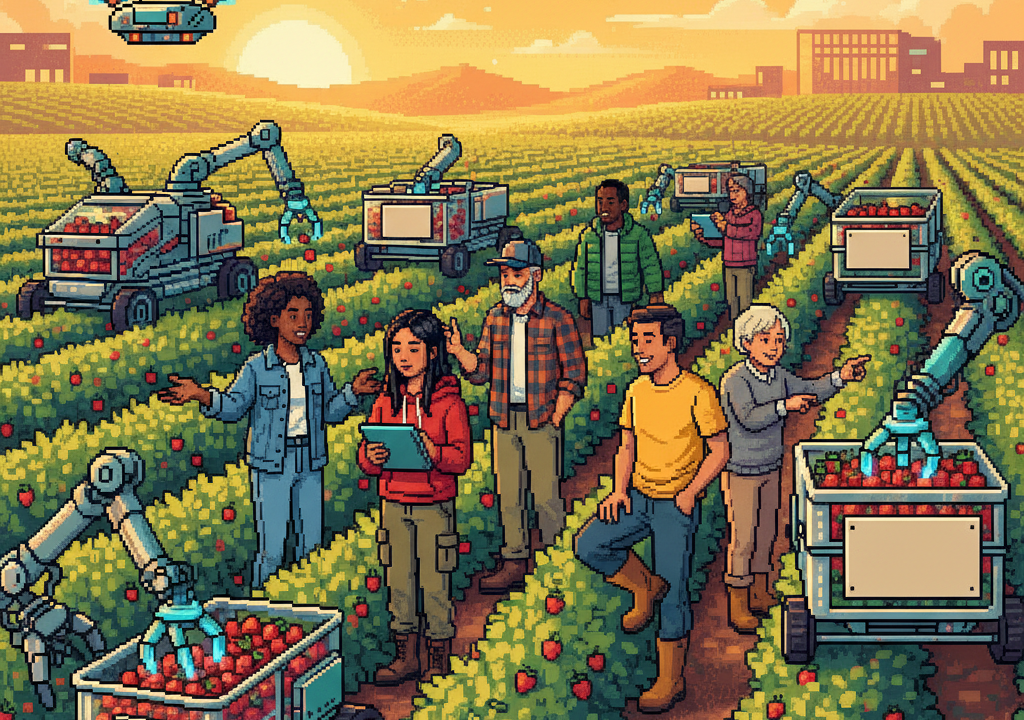
A breakthrough in soft-touch AI and pneumatic precision has allowed robotic harvesters to finally dominate specialty crops like berries and stone fruits. With labor shortages reaching critical levels in 2026, California’s leading growers are pivoting to full-scale automation, signaling a permanent shift in agricultural overhead and supply chain reliability.
What happened

In a landmark move this June, California Gold Orchards, the nation’s largest independent stone fruit producer, announced that 85% of its 2026 peach and plum harvest will be managed by the TerraBotics 'Ceres-9' autonomous fleet. This follows a devastating 2025 season where nearly $400 million in specialty crops rotted in the fields due to a critical shortage of H-2A visa workers and a 14% spike in domestic labor costs.
The breakthrough comes from TerraBotics’ proprietary 'Soft-Grip 3.0' technology, which uses haptic feedback and multi-spectral imaging to identify ripeness and pluck delicate fruit without bruising. Simultaneously, BerryVantage Systems reported that their strawberry-picking droids have achieved a 98% damage-free rate, surpassing the 94% industry average for human pickers. These machines operate 24/7, utilizing thermal sensors to continue harvesting through the night when cooler temperatures help preserve fruit firmness.
As of June 12, 2026, over 1,200 units have been deployed across the Central Valley and the Pacific Northwest. Unlike previous iterations that required expensive trellising overhauls, the 2026 models are 'retrofittable,' capable of navigating traditional orchard layouts with sub-centimeter GPS accuracy provided by the recently launched AgriSat-6 constellation.
Why it matters

For decades, the 'delicacy' hurdle prevented robots from entering the specialty crop market, leaving high-value fruits like raspberries, peaches, and grapes tethered to a shrinking and increasingly expensive human labor pool. The success of the 2026 harvest proves that the technological asymptote has been reached; the dexterity of AI-driven pneumatics now matches or exceeds human capability. This effectively de-risks the most volatile component of the agricultural supply chain: the harvest window.
This shift also signals a transition in farm management from human resources to data management. Farmers are no longer searching for 500 seasonal workers; they are hiring five robotics technicians and purchasing 'Pick-as-a-Service' (PaaS) subscriptions. This move from variable labor costs to fixed technology expenditures allows for more predictable food pricing and more resilient margins for retailers who have struggled with the 'inflationary fruit' cycles of the last three years.
Market impact

The shift is driving a massive influx of CapEx into the AgTech sector. In Q1 2026 alone, $4.2 billion was invested in 'precision-grasp' robotics, a 210% increase year-over-year. Mid-sized farms that adopted the R-Harvest leasing model reported a 22% reduction in operational expenditure, though the initial barrier to entry remains high for independent growers.
Market analysts at AgriCapital predict that by 2028, 40% of all North American specialty crops will be machine-harvested. This transition is expected to stabilize wholesale fruit prices, which have seen a volatile 8% CAGR since 2022, potentially bringing them down by 5-7% by the end of the next fiscal year as labor-related crop loss is minimized.
Consumer insight

Today's consumers are increasingly 'automation-agnostic,' prioritizing price stability and ethical sourcing over the romanticized notion of hand-picked produce. A 2026 survey by EthosFood Research found that 62% of Gen Z shoppers prefer 'robot-harvested' labels if they guarantee zero human labor exploitation and a 15% reduction in shelf price. Furthermore, the perfectionism fatigue of the early 2020s has faded. Consumers now accept minor cosmetic variances (once a deterrent for robotic adoption) provided the fruit is harvested at peak Brix levels, a feat machines like the Ceres-9 are now performing more accurately than human eyes.
Strategic takeaway

Operators and retailers must prepare for a shift from 'seasonal labor' risks to 'technical infrastructure' risks. Brands should begin vetting suppliers not just on their yield, but on their automation roadmap; those who fail to integrate robotic harvesting by 2027 will likely be priced out of the commodity market. Additionally, marketing teams should lean into the 'tech-forward sustainability' narrative to lean into consumer comfort with autonomous food production.
Get the next signal in your inbox.
Daily food industry intelligence — free.
You've reached the end.