Ingredients
The Amber Wave: Date Syrup Captures the CPG Sweetener Market
From niche health shops to massive scale, the viscous nectar of the date palm has become the industry's preferred binder and sweetener.
By FTF Editorial Team·June 8, 2026·4 min read
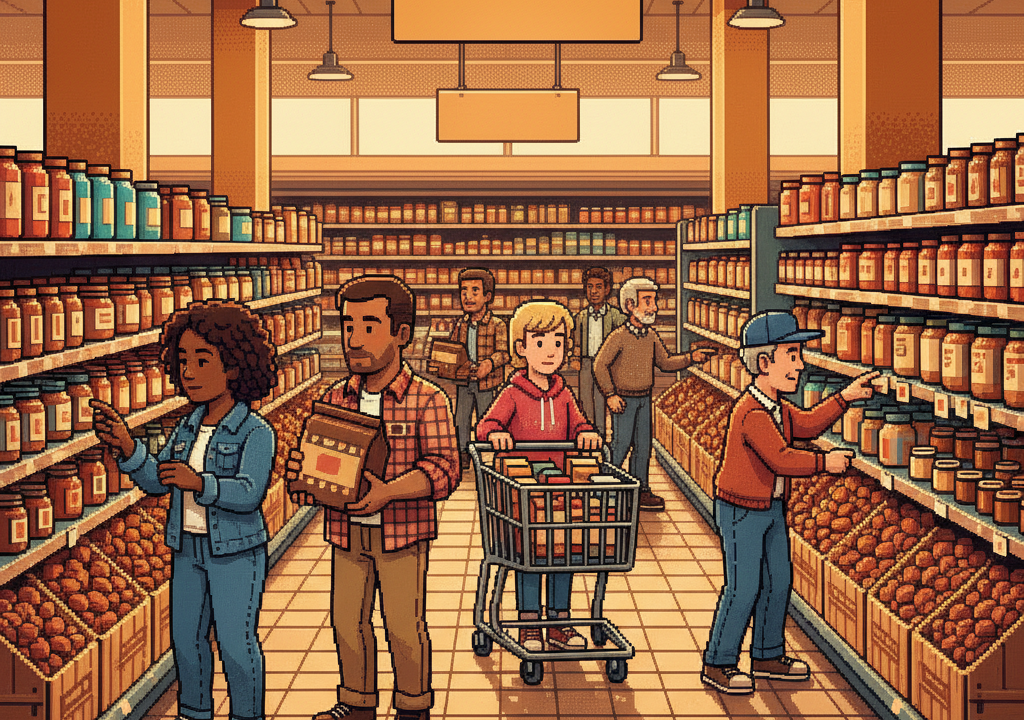
The CPG industry is witnessing a massive pivot toward date syrup as a primary sweetening agent, displacing refined sugars in snacks and beverages. Major brands are leveraging the ingredient's high fiber content and mineral profile to maintain clean-label integrity without sacrificing texture.
What happened

In June 2026, major CPG players have officially transitioned away from high-fructose corn syrup and agave in favor of date syrup. General Mills recently debuted a 'Nature Valley: Whole Fruit Sweetened' line, while Chobani launched a new 'Date-Dark' yogurt series using Moroccan date nectar to achieve a deep flavor profile without added cane sugar. This shift follows the 2025 FDA clarification on 'added sugars,' where date-derived sweeteners began to see preferential treatment in labeling when used in fruit-based snacks. Startup 'Liquid Gold Ingredients' announced a $50 million Series B this month to scale their proprietary cold-filtration process, which produces a clear, neutral-tasting date nectar that mimics the functionality of light corn syrup in confectionery applications.
Why it matters

For years, the industry struggled to find a sweetener that offered both functional binding properties and a clean nutritional profile. Unlike stevia or erythritol, date syrup provides bulk, caramelization via the Maillard reaction, and moisture retention in baked goods. It contains potassium, magnesium, and antioxidants, allowing brands to move products from the 'indulgence' category to 'functional health.' As global sugar taxes become more stringent in European and North American markets, date syrup offers a path to lower sugar-equivalence on labels while maintaining the mouthfeel consumers expect from premium products. It represents the successful convergence of food-as-medicine and industrial scalability.
Market impact

The global date-derived ingredients market has surged to a 7.4 percent CAGR, with the liquid sweetener segment expected to reach a valuation of $1.8 billion by the end of 2027. In the North American energy bar category, date syrup utilization has increased by 42 percent year-over-year as brands phase out brown rice syrup and agave. Industrial suppliers like Dole Specialty Ingredients and Sunfood have expanded their North African and Middle Eastern processing facilities to meet this 2026 demand spike. Large-scale procurement by beverage giants looking for natural 'caramel' coloring and sweetness in one ingredient is currently driving a 15 percent price premium on organic Deglet Noor concentrates compared to 2024 levels.
Consumer insight

Modern consumers are suffering from sweetener fatigue, having cycled through stevia, monk fruit, and allulose only to find issues with aftertaste or digestive tolerance. The shift toward date syrup connects with the ‘Whole Food Matrix’ movement, where shoppers prioritize ingredients that look like food rather than lab-synthesized powders. Market research shows that 64 percent of millennial parents view dates as a functional fruit rather than a sugar source, allowing for a halo effect of permissibility. This isn't just about low-glycemic index scores; it’s about the emotional comfort of an ancient, recognizable ingredient that fits into a Paleo or Mediterranean diet framework.
Strategic takeaway

CPG manufacturers should prioritize securing long-term supply contracts for date concentrates now, as inventory tightens due to high demand in the dairy and bakery sectors. R&D teams should focus on the 'dual-action' benefit of date syrup. it is both a binder and a sweetener, which thus simplifies ingredient decks. Brands that emphasize the '1:1 ratio' of whole fruit nutrition will successfully capture the premium wellness segment looking for alternatives to processed cane sugar.
Get the next signal in your inbox.
Daily food industry intelligence — free.
You've reached the end.