Sustainability
Urban Indoor Mushroom Farms Scale Inside City Limits
Hyper-local fungi production leverages urban infrastructure, delivering premium varieties with unprecedented freshness to metropolitan markets.
By FTF Editorial Team·July 10, 2026·5 min read
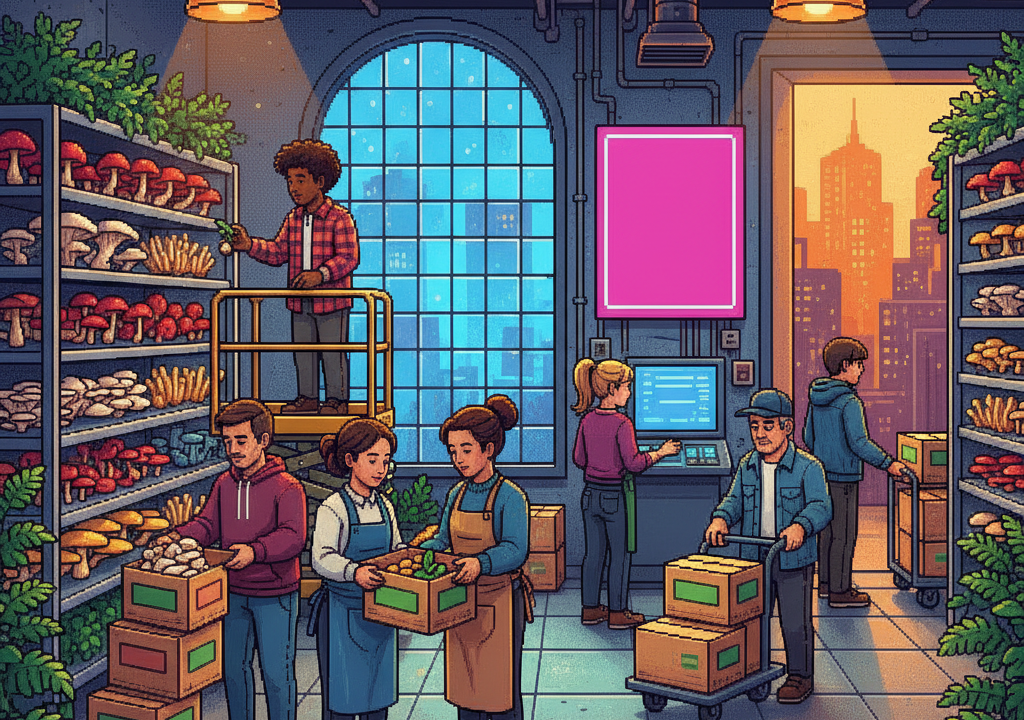
Vertical, climate-controlled mushroom farms are scaling within city limits in 2026, directly supplying restaurants and grocers. This development promises ultra-fresh specialty fungi while significantly reducing supply chain emissions and transit times.
What happened

The controlled environment agriculture (CEA) sector is witnessing a targeted expansion into urban mushroom cultivation. While vertical farming has primarily focused on leafy greens, 2026 marks a significant pivot towards specialty fungi, driven by advancements in substrate automation, environmental control systems, and varietal specific growth protocols. Companies like MycoUrban Farms in Chicago and FungusFactor in Brooklyn are leading this charge. They are establishing multi-story indoor facilities capable of producing several tons of exotic mushrooms, such as lion's mane, oyster, and shiitake, per week within dense urban environments. These operations are characterized by their small footprint, high yield per square foot, and precise climate management, optimizing temperature, humidity, and CO2 levels for accelerated growth cycles.
Investment flows into this niche have increased, with venture capital firms recognizing the potential for high-margin produce with lower logistical overheads. For instance, GreenHarvest Capital recently announced a $20 million Series A round for MycoUrban Farms, specifically earmarked for facility expansion and R&D into new cultivation techniques for less common varieties. This funding signals a maturation of the urban mushroom farming segment, moving beyond pilot projects to commercially viable, scalable enterprises. The integration of AI-driven environmental sensors and automated harvesting systems further enhances efficiency, reducing labor costs and ensuring consistent quality (a factor that has historically been a challenge in traditional mushroom farming due to sensitivity to environmental fluctuations).
Distribution models are designed for hyper-locality. MycoUrban Farms uses electric vans to deliver within a 5-mile radius, serving Michelin-starred restaurants and high-end grocery chains like FreshFields Market directly. This direct-to-consumer (DTC) or direct-to-business (DTB) approach bypasses traditional distribution centers, cutting transit times from days to hours. The result is a product with superior shelf life and flavor profile compared to conventionally sourced mushrooms, which often travel hundreds or thousands of miles from rural farms or international suppliers.
Why it matters

This scaling of urban mushroom farms represents a critical evolution in controlled environment agriculture, addressing both logistical inefficiencies and consumer demand for fresher, more sustainable produce. By situating production facilities within consumption hubs, these farms drastically reduce the carbon footprint associated with transportation, aligning with increasing corporate and consumer emphasis on environmental sustainability. The ultra-fresh delivery model minimizes spoilage, a significant problem in the perishable produce sector, thereby improving profitability for both growers and retailers.
Furthermore, urban mushroom farms provide a consistent, year-round supply of specialty varieties that are often difficult to source reliably through conventional channels due to seasonal limitations or import complexities. This stability allows restaurants and grocers to innovate their menus and product offerings without concern for supply chain disruptions, fostering culinary creativity and diversifying consumer options. The localized nature also allows for greater traceability and quality control, building trust with a more discerning customer base.
Market impact

The entry of scaled urban mushroom farms will introduce a new competitive dynamic in the specialty produce market. While unlikely to fully displace traditional mushroom suppliers in the short term, they will capture significant market share in high-value urban segments. Grocers and food service providers leveraging these local suppliers can market 'hyper-fresh' and 'locally grown' distinctions, driving premium pricing and consumer loyalty. This trend will pressure traditional distributors to either shorten their supply chains or differentiate through other means.
Consumer insight

Consumers, particularly in urban areas, are increasingly prioritizing freshness, sustainability, and local sourcing in their food choices. The appeal of mushrooms harvested hours, not days, before purchase, coupled with clear provenance and reduced environmental impact, resonates strongly. This segment is willing to pay a premium for perceived higher quality and ethical production, driving demand for these localized fungi.
Strategic takeaway

Food retailers and foodservice operators should actively seek partnerships with urban mushroom farms to secure a consistent supply of premium, locally-sourced specialty fungi. This move can enhance brand image, meet consumer demand for sustainable products, and differentiate offerings in a competitive market.
Get the next signal in your inbox.
Daily food industry intelligence — free.
You've reached the end.